
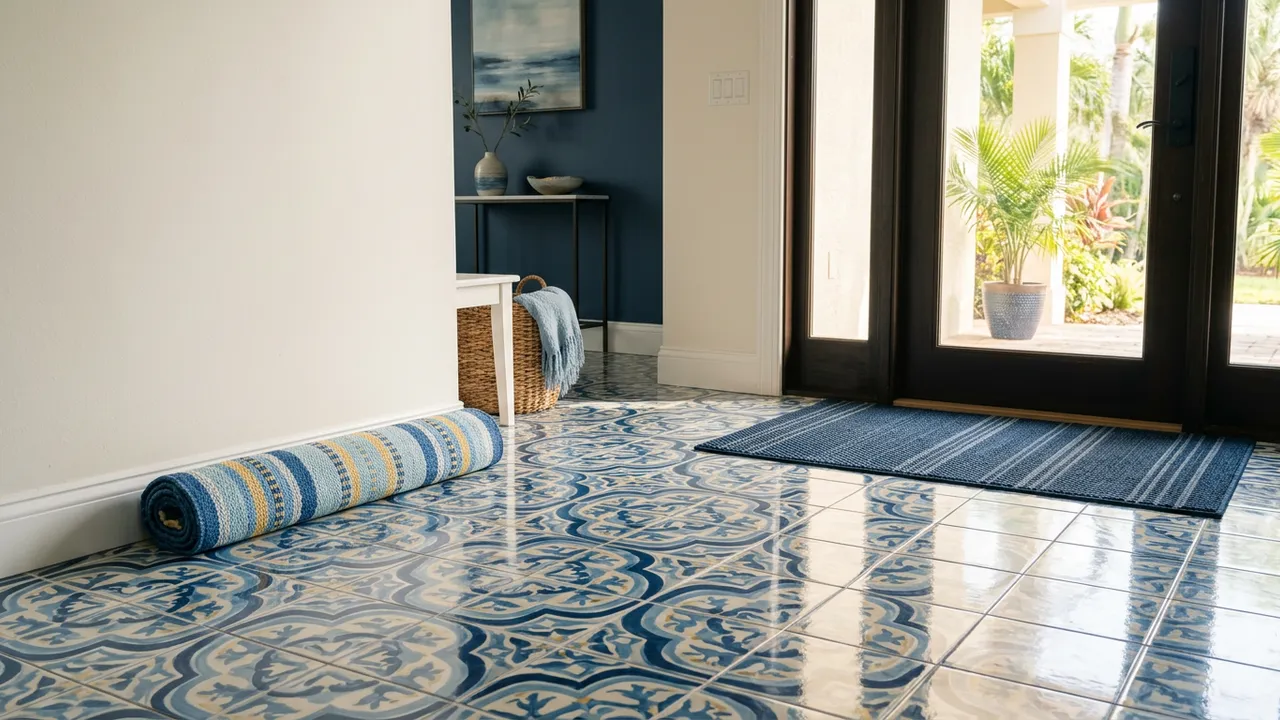
Yes. Removing or securing throw rugs is the first item on the list of fall fixes to make today. Smooth tile floors, which are common in Florida homes, can also turn slippery when wet. The good news is that both problems are cheap and quick to fix.
Why rugs cause falls
Slips and trips make up a real share of falls, and they usually come from the environment. Rugs cause trouble in several ways:
- The edge catches a toe, especially when a person shuffles or takes short steps.
- The rug slides on a smooth floor when you step on it or turn.
- A curled corner or bunched fold creates a bump you do not expect.
- Walkers and canes catch on rug edges.
Your best options, in order
- Remove the rug. This is the simplest and safest choice, especially in hallways, beside the bed and in the bathroom.
- If you keep it, secure it. Use non-slip backing, and make sure every edge lies flat.
- Secure runners in hallways so they cannot slide or bunch.
- Stretch wall-to-wall carpet that has ripples or loose spots.
If a rug matters to your parent, for comfort or memories, talk about it. Moving a favorite rug to a spot where no one walks, such as under a table, can be a fair compromise.
Bath rugs and bathroom floors
Bath rugs are a common bathroom hazard. Instead of a loose rug:
- Use a non-slip mat and decals in the tub or shower.
- Add grab bars by the toilet and in and outside the tub or shower, anchored into studs, not suction cups.
- Wipe up water as soon as you step out.
See What grab bars do I actually need in the bathroom? for details.
Tile, water and the Florida rainy season
Wet entry areas during the rainy season are a common Tampa Bay problem. Rain, pool water and wet shoes all end up on smooth floors near doors.
- Keep a spot by each door to wipe or remove wet shoes.
- Clean spills at once, anywhere in the house.
- Watch the lanai door. The track and threshold of a sliding door are a known trip point. See Is a lanai sliding door a fall risk?
- In the kitchen, use non-slip anti-fatigue mats where you stand, not loose rugs.
Patterns, glare and edges
Busy carpet and tile patterns can hide edges and dropped items. Solid surfaces are safer. Glare off shiny floors can also make it hard to see, so matte finishes and sheer curtains can help.
Contrast matters too. Older eyes need about three times as much contrast. Keep a clear color change between the floor and the wall and at doorways, and mark thresholds and step edges with contrasting tape.
Footwear: the other half of the floor
A safe floor still needs a safe shoe. Safer shoes have:
- Low heels, under about 1.5 inches
- A firm heel
- Thin, firm soles with good grip
- Secure fastening, such as hook and loop
Avoid backless slippers, worn-out treads and walking in plain socks, which are slippery on tile. If you do not wear shoes indoors, use non-skid socks.
Other floor hazards
- Cords across walkways. Reroute them or use cord covers.
- Clutter. Keep paths at least 36 inches wide, wider for a walker.
- Pets. Dogs and cats lie in walkways and trip people.
- Changes in flooring. Where tile meets carpet, make sure the transition is secure and easy to see.
- Fall mats. Beveled bedside mats can protect someone who rolls out of bed, but they can become a trip hazard for a person who walks with a walker.
A quick room-by-room check
Walk through the home and look down. Count the rugs. Check every doorway. Look at the floor near each exterior door after a rainstorm. The CDC's Check for Safety checklist is a good guide.
How Home Safety Solutions can help
On a home safety visit, we walk every path your parent uses, look at each rug, threshold and floor change, and check footwear. Then we rank fixes from free (removing a rug) to larger projects. Learn what happens during a home safety visit. Call (813) 365-9171 or email info@homesafety.solutions.
Related reading: Is a lanai sliding door a fall risk? · How do I prevent falls at night? · How do I make a sunken living room safe for a walker? · Is it normal to fall as you get older?
This article is general education, not medical advice. Talk with your doctor, pharmacist, or therapist about your own situation.