
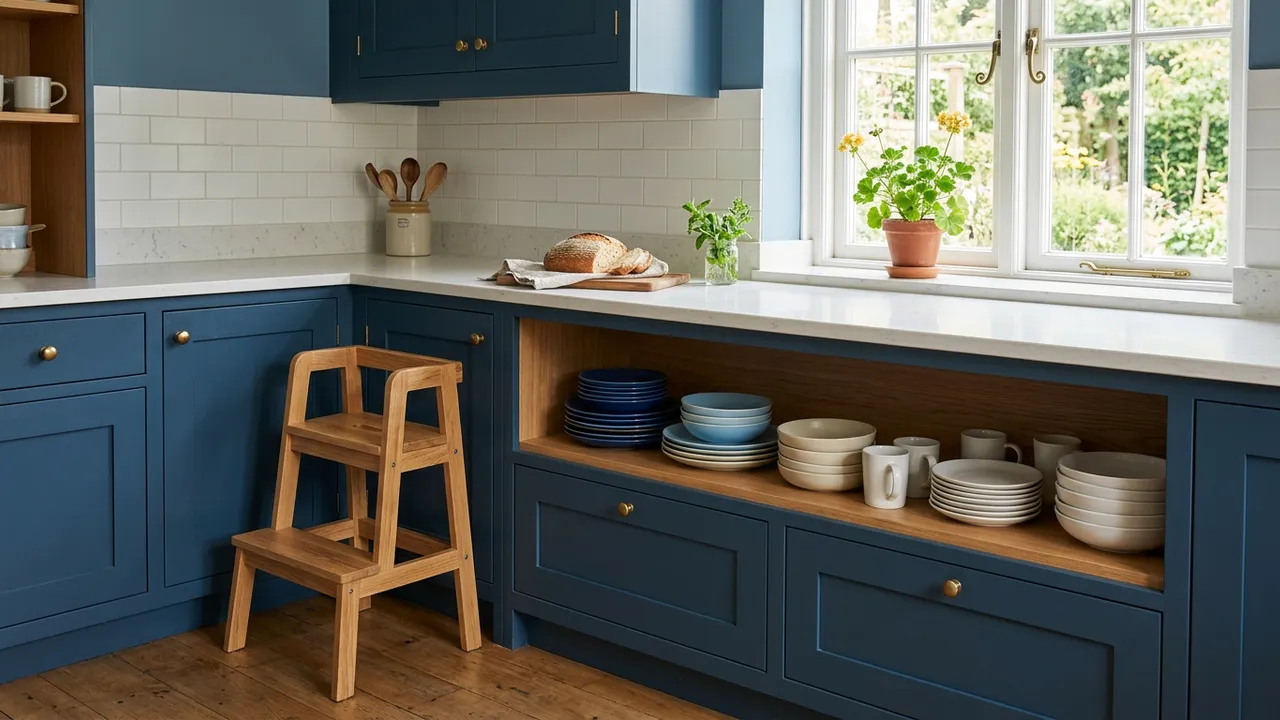
The biggest kitchen fall risks are reaching up high, bending down low and climbing on a chair to get something. The fix is mostly about where things are stored: keep what you use every day between waist and shoulder height. Add good light, clean spills right away and keep pets out from underfoot while you cook.
Move things, not your body
Every time you stretch to a top shelf or crouch to a bottom cabinet, your balance is tested. Reorganize the kitchen around your daily routine.
- Daily items at waist to shoulder height. Your favorite mug, plates, pots, coffee and medications belong on the counter or the lower shelves of upper cabinets.
- Rarely used items go up high or down low. The holiday platter can live on the top shelf.
- Give everything a fixed place. When things always go back in the same spot, you are not searching, leaning and twisting.
- Use a reacher for light items that are just out of range. Reachers also reduce risky bending to pick things up off the floor.
Step stools: the right way
- Never use a chair to reach. Chairs tip, swivel and roll.
- If you must climb, use a sturdy step stool with a handrail.
- Better yet, ask whether you need to climb at all. Moving the item down is safer than going up to get it.
If climbing a step stool feels shaky, take that seriously. It may be time for a strength and balance check with a physical therapist.
Light and contrast
- Add under-cabinet lights so the counter is bright where you work.
- Older eyes need about three times as much contrast. A dark placemat under a white plate, or a contrasting cutting board, makes things easier to see.
- For a parent with low vision, simple tools help: a liquid level indicator that signals when a cup is full, cutting guides, and labels facing forward. A talking thermometer is another option.
Floors, spills and pets
- Clean spills at once. A splash of water on a smooth floor is enough to cause a slip.
- Use non-slip anti-fatigue mats where you stand at the sink or stove, not loose throw rugs.
- Keep pets out of the kitchen while you cook. A pet gate works well. Dogs and cats love to sit right behind your feet.
- Keep cords off the floor and away from walking paths.
Everyday tasks to rethink
- Carrying. Carrying a hot pot, a full cup or a heavy bag takes attention away from your feet. Carry less, use a cart or a standing cane with a tray if one fits your needs, and slide heavy items along the counter instead of lifting them.
- Bending. Loading the dishwasher and reaching into the oven are bending tasks. Hold the counter with one hand, and rise slowly.
- Furniture walking. If you or your parent steady yourselves on the counters to get around, that is a sign of balance trouble worth mentioning to the doctor.
- Distraction. Let the phone ring while you are carrying something. Focus on one task at a time.
Watch for dizziness after meals
For some older adults, blood pressure drops during or after a meal. That can cause dizziness when getting up from the table. Smaller meals with fewer carbohydrates, and rising slowly after eating, can help. If you notice this, tell your doctor. Do not change any medicine on your own.
Eat and drink well
The kitchen is also where good nutrition starts, and nutrition matters for falls. People who fall are more likely to be poorly nourished. Some helpful habits:
- Include protein at each meal to protect muscle.
- Keep healthy snacks within easy reach.
- Drink fluids regularly through the day, unless your doctor limits fluids. In the Florida heat, keep water handy.
- Eat with others when you can; social meals help appetite.
A dietitian can help if eating has become hard.
A kitchen that keeps you moving
The goal is not to stop cooking. Everyday chores like setting the table and folding towels keep your body moving. A safer kitchen means you can keep doing them.
How Home Safety Solutions can help
During a home safety visit, we watch how you actually use your kitchen: what you reach for, where you bend and how you carry. Then we suggest a simple storage plan and any lighting or flooring changes, ranked from free to larger projects. Learn what happens during a home safety visit. Call (813) 365-9171 or email info@homesafety.solutions.
Related reading: Five ways your home can help a parent stay independent · Safety squad: getting grandkids involved · CDC Check for Safety checklist (PDF) · Is it normal to fall as you get older?
This article is general education, not medical advice. Talk with your doctor, pharmacist, or therapist about your own situation.