
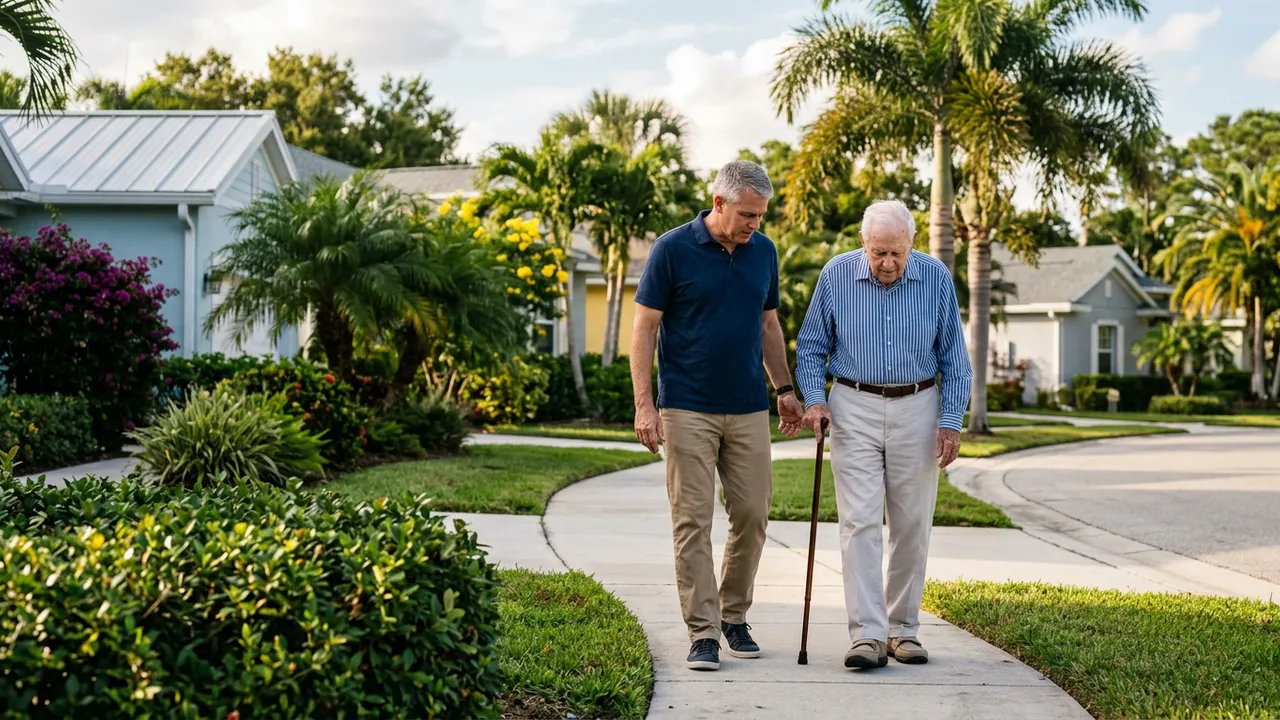
Watch how your parent moves, not just what they say. Holding on to furniture to get around, pushing up hard with their hands to stand, shuffling or slowing down, and avoiding stairs or outings are all signs worth noticing. Many older adults never mention a fall: fewer than half of people who fall tell their doctor.
Start with three questions
Doctors use three simple questions to screen for fall risk. You can ask them gently too:
- Have you fallen in the past year?
- Do you feel unsteady when standing or walking?
- Are you concerned about falling?
A "yes" to any one of them is a reason to bring it up with the doctor. One fall doubles the chance of another.
How they walk and stand
On your next visit, quietly notice:
- Furniture walking. Do they reach for chairs, counters or walls as they move through the house?
- Standing up. Do they need to push with their hands to get out of a chair? That can mean weaker leg muscles.
- Steps and curbs. Is stepping up onto a curb harder than it used to be?
- The walk itself. Shuffling, short steps, a slow pace, a wide stance, a stiff turn of the whole body or less arm swing.
- Catching their balance. Small trips or near misses, even without a fall.
- The walking aid. Do they carry the cane instead of using it? Are the tips worn?
Clues about vision
Vision changes often go unnoticed. Look for:
- A collection of eye drop bottles
- Trailing a hand along walls or counters
- Hesitating at doorways, on stairs or when the lighting changes
- Closing one eye
- New trouble with mail or paperwork, which is sometimes blamed on memory instead of eyesight
Ask when their last eye exam was.
Medicines and how they feel
Some medicines raise fall risk. Signs to notice:
- Lightheadedness or dizziness, especially when standing up
- Unusual tiredness or weakness
- Big swings in energy at certain times of day
- Taking medicine for sleep or mood
Also ask about over-the-counter sleep aids, supplements and alcohol. Do not suggest stopping anything. Instead, bring a full list to the doctor or pharmacist and ask, "Could any of these affect balance?"
Mood, sleep, bladder and eating
These are easy to miss, yet they matter:
- Rushing to the bathroom, or getting up two or more times a night
- Feeling sad or pulling back from friends and activities
- Poor sleep
- Not eating or drinking well. Take a look in the refrigerator. In the Florida heat, fluids matter.
- Numbness in the feet
- Hearing trouble
- Pain that limits how they move
A changed attitude
Watch for new worry about falling, even without a fall. When concern turns into avoiding activity, people get weaker and fall more. Also listen for "old people fall" or "nothing can be done." Falls are not just a normal part of aging, and many causes can be treated. Our article Is it normal to fall as you get older? explains why.
Around the house
- Throw rugs, clutter and cords in walkways
- Dim lighting, especially on the route from bed to bathroom
- A phone or glasses out of reach
- Stairs without rails, or a rail that wobbles
- Shoes that are backless or worn out
Times of higher risk
Pay closer attention in the month after a hospital stay, after any new medicine, and after an illness. If your parent has needed help getting up from the floor, or had to call for a "lift assist," that is a strong signal to ask for a full falls assessment.
What to do with what you notice
- Write it down. Specific observations ("She held the counter all the way to the sink") help the doctor.
- Try a self-check together. The NCOA Falls Free CheckUp or the CDC Stay Independent brochure can open the conversation.
- Ask about physical therapy. Strength and balance exercise is the most effective way to prevent falls.
- Check the house. See Can my parent age in place in their current home?
If you live far away, see How can I check on a parent's safety from another state?
How Home Safety Solutions can help
A home safety visit looks at the person first, using standard balance and walking tests, then the house. You receive a written report with prioritized findings and suggestions to share with your parent's doctor. Learn what happens during a home safety visit. Call (813) 365-9171 or email info@homesafety.solutions.
Related reading: How can I check on a parent's safety from another state? · Can my parent age in place? · CDC caregiver brochure (PDF)
This article is general education, not medical advice. Talk with your doctor, pharmacist, or therapist about your own situation.