
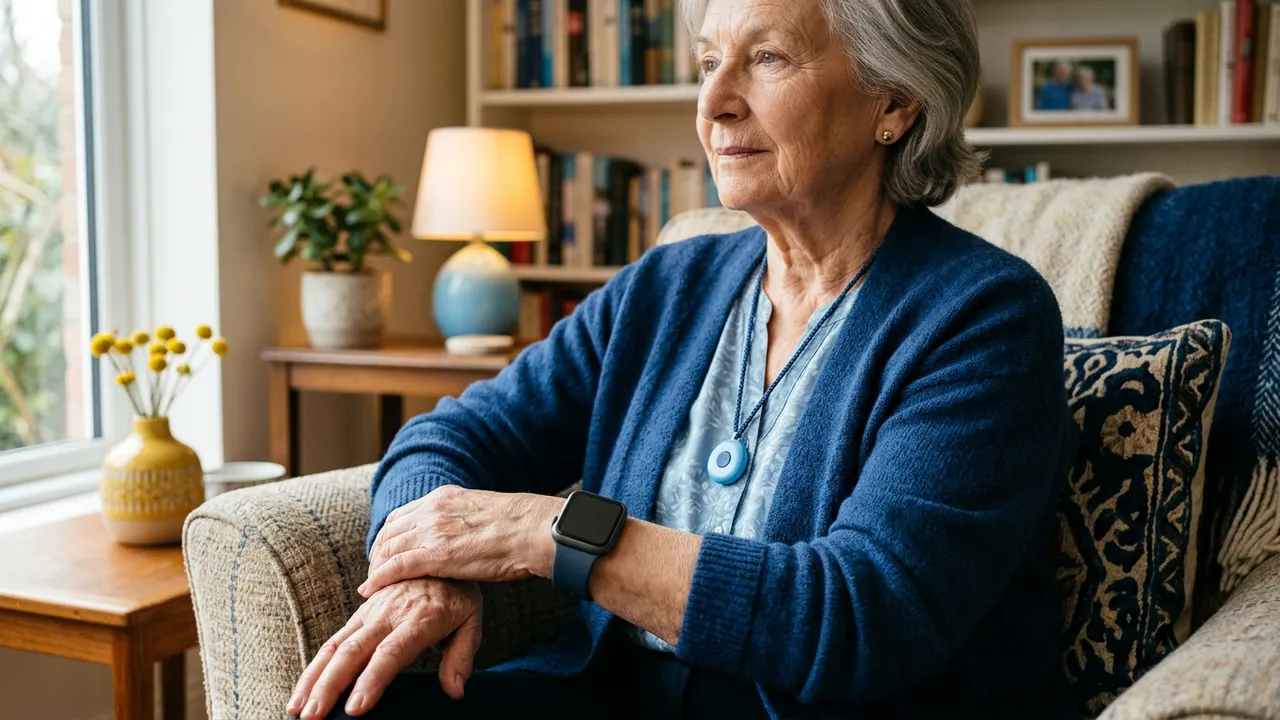
A medical alert device can get help to you faster after a fall. It does not stop the fall from happening. The device is optional; the plan for what happens after a fall is not.
Why getting help fast matters
A long time on the floor is dangerous in itself. Up to 80% of people over 90 cannot get up after a fall. Lying on the floor for an hour or more can cause dehydration, kidney injury, pressure injury, hypothermia, and pneumonia.
That is why the first rule is simple: keep a phone on your body, not across the room. A phone in a pocket or on a lanyard can be the difference between a short wait and a long one.
What the devices are
- Personal emergency response systems (PERS). A button you wear as a pendant or on your wrist. Pressing it connects you to help. Ideally, choose one with automatic fall detection and GPS so help can find you away from home.
- Smartwatches with fall detection. Some smartwatches offer fall detection. On the Apple Watch, fall detection must be turned on for some users, so check the setting.
- Phone-based walking tools. The iPhone Health app's Walking Steadiness feature measures balance and walking from everyday steps. It can alert you and a family member when steadiness is low. A sudden change is a reason to talk with your doctor or therapist.
- Home sensors. Motion sensor lights, smart speakers that turn on lights by voice, and video doorbells don't detect falls, but they cut down on trips in the dark and rushing to the door.
What the evidence says
Personal emergency response systems shorten long lies and reduce hospital use. But current evidence does not show that wearables alone prevent falls. Preventing falls still comes down to strength and balance exercise, a medication review, vision care, and a safer home.
The catch: people don't press the button
Many older adults still delay pressing the button after a fall. A device also can't help if it is on the dresser instead of on you.
What helps:
- Practice pressing it. Do a test call so you know what happens and how long it takes.
- Wear it all the time, including in the bathroom and in bed. Ask whether your device is water resistant.
- Agree ahead of time that pressing the button is the right thing to do, not a bother.
- Turn on automatic fall detection if your device has it, so help comes even if you can't press.
Technology is optional. A plan is not.
Every household needs a plan for after a fall, with or without a device:
- Learn to get up safely. Practice with a therapist: stay still and check for injury, roll to your side, push up to hands and knees, crawl to a sturdy chair, bring one foot forward, then push up and turn to sit.
- Know what to do if you can't get up. Call for help, keep warm, shift position, and stay as comfortable as possible.
- Set up regular check-ins. A daily call or visit from family or a neighbor catches problems a device might miss.
- Make it easy for responders to get in. A key safe by the door saves time.
- Treat any fall as a warning. A fall, or a call for help getting up, is a reason to ask your doctor for a fall risk check.
Caregivers should learn not to drag or lift a person who is uninjured, but to coach them through getting up.
Respect privacy and choice
Monitoring works best when the person being monitored agrees to it. Be clear about consent for drop-in video calls, never put cameras in bathrooms, and make sure the person can turn monitoring off. Technology supplements, and never replaces, human help.
Questions to ask before you buy
- Does it have automatic fall detection, and can I turn it on?
- Does it work away from home (GPS)?
- Can I wear it in the shower and in bed?
- Who answers when I press it, and who gets called?
- How do I test it?
Home Safety Solutions does not accept referral fees from any vendor, so our suggestions stay unbiased.
How Home Safety Solutions can help
A home safety visit includes a plan for what happens if you fall: where your phone or alert device lives, whether you can get up from the floor, and how help gets in. We suggest technology only when it fits your needs and routines. Read I've fallen and I can't get up for more. Call (813) 365-9171 or email info@homesafety.solutions.
Related reading: I've fallen and I can't get up · Video cameras for Mom & Dad · How can I check on a parent's safety from another state? · Keeping veterans safe at home with smart technology · Is it normal to fall as you get older?
This article is general education, not medical advice. Talk with your doctor, pharmacist, or therapist about your own situation.