
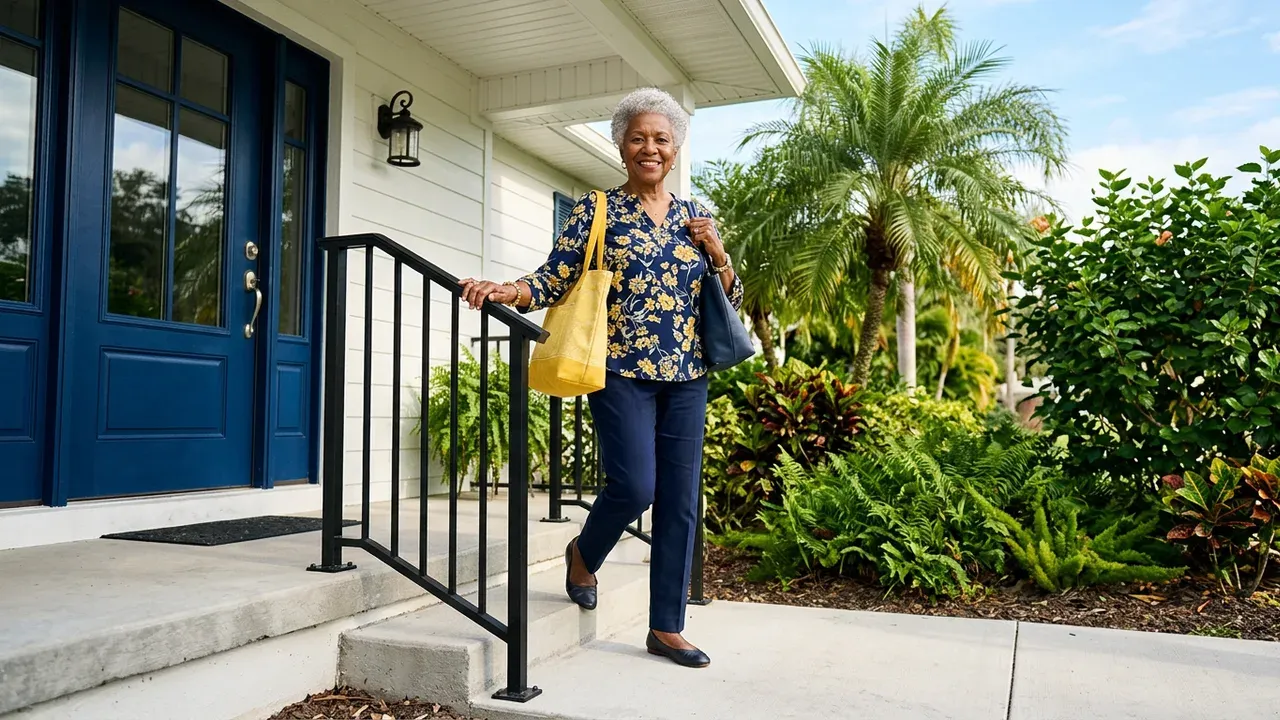
Most advice about staying independent focuses on the person: exercise more, eat better, stay social. Those things matter. But after 35 years as a physical therapist, much of it in people's homes, I have learned that independence is a fit between a person and a place. When the home stops fitting, independence shrinks, even if nothing about the person has changed.
Here are five areas where a few changes to the home can protect a parent's independence for years.
1. Make it easy to get out the door
People stay connected when leaving the house is easy. They stop going out when it is hard. In Tampa Bay homes, the usual barriers are a step down into the garage with no rail, a heavy front door, a raised track at the lanai slider, or a dark walkway at night.
Watch your parent leave the house once. Do they grab the door frame? Hesitate on the garage step? Avoid going out after dark? A sturdy rail, a motion light or a threshold ramp can quietly keep the card games, church and lunch dates on the calendar.
2. Fit the home to the body, not the other way around
Grab bars, non-slip flooring and better lighting are the familiar fixes, and they work. The mistake is buying them off a checklist. A grab bar in the wrong spot is just a towel rack. A raised toilet seat can make a transfer harder for someone with a stiff hip.
The right change starts with how your parent actually moves: which hand is stronger, how they turn, where they reach for support today. That is the difference between a hazard list and a clinical home assessment.
3. Set the house up to keep them moving
Strength and balance are the foundation of independence. The CDC reports that more than one in four adults 65 and older falls each year, and that falling once doubles the chance of falling again. Exercise classes help, but daily movement at home matters just as much.
A clear, well-lit path to the mailbox, a sturdy chair with arms for sit-to-stand practice, and furniture arranged so walking is easy all invite movement. A cluttered or dim home teaches people to sit still.
4. Keep the kitchen within reach
Good nutrition depends on a kitchen your parent can use safely. Watch for everyday items stored up high, a step stool in regular use, heavy pots on low shelves and a stove left on.
Moving daily items to between hip and shoulder height, adding pull-out shelves and installing an automatic stove shutoff can keep a parent cooking for themselves much longer.
5. Plan for the day driving stops
If your parent still drives, look at the car transfer itself. Getting into and out of a low sedan in a tight garage is a common fall point. A handle that slips into the door latch, a swivel cushion or simply better garage lighting can help.
If driving has stopped, plan transportation before it becomes a crisis. Your county's senior services office can tell you what rides are available locally.
How we help
A Home Safety Visit includes a clinical look at how your parent moves, a room-by-room review of the home, a photo report and a prioritized hazard list. We do not sell or install the products we recommend, so our advice stays on your parent's side. We visit homes in Hillsborough, Manatee and Pinellas counties, and offer virtual visits in Florida, Ohio and New York. Every service starts with an Initial Consultation, a 30-minute phone call. Current prices are on our pricing page.
Sources
- Centers for Disease Control and Prevention. Facts About Older Adult Falls