
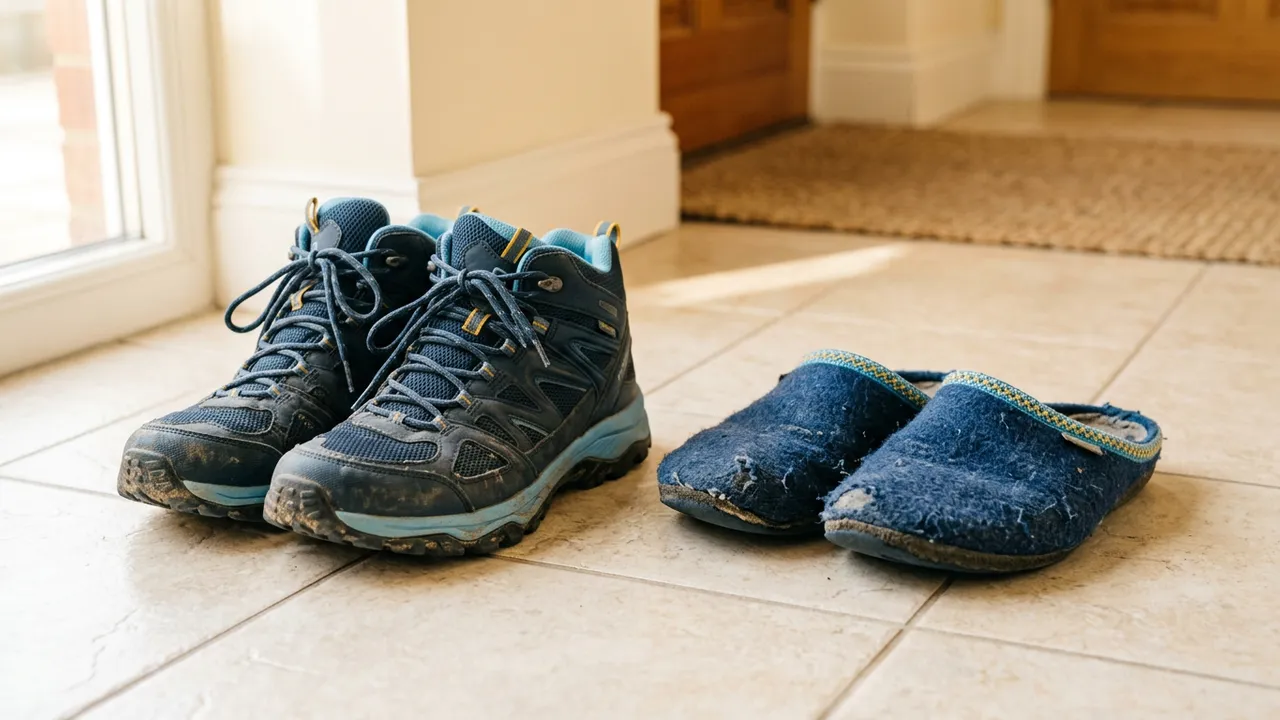
Your feet are part of your balance system. When they lose feeling, hurt, or sit in loose or slippery shoes, your brain gets poor information about the ground, and a fall becomes more likely. The good news: footwear is one of the easiest fall risks to fix.
How your feet help you balance
Your body has a built-in sense of where its parts are, called proprioception. Nerves in your feet and joints tell your brain how the ground feels and where your weight is. With age, most people lose some sensitivity to light touch, vibration, and joint position.
Other things blur that signal even more:
- Peripheral neuropathy (nerve damage), often from diabetes
- Low vitamin B12, which can come with long-term use of metformin
- Joint replacements, casts, and walking boots
- Swelling, scars, and chronic pain
Tired, sore muscles also dull this sense for a while. Take extra care after a hard workout or a long day on your feet.
Numb or tingling feet? Tell your doctor
The CDC's Stay Independent checklist includes the statement "I have lost some feeling in my feet." A yes adds to your fall risk score. Nerve pain that burns or tingles is often worse at night, which is exactly when many people walk to the bathroom.
At your next visit, ask your doctor:
- Can you check my feet and the feeling in them?
- Does a vitamin B12 test make sense for me, especially since I take metformin?
- Could any medicine I take for nerve pain be adding to dizziness or sleepiness?
Some nerve pain medicines carry fall risk of their own, so this is a question for your doctor or pharmacist. Never stop or change a medicine on your own. Daytime activity, good footwear, compression, and simple ankle pumps can also ease nerve pain.
If your feet hurt, see a podiatrist. A foot care program that combined foot and ankle exercises, orthotics, and footwear advice reduced falls in older adults with disabling foot pain.
The safer-shoe checklist
Grab the shoes you wear most and check them against this list:
- Low heel: under about 1.5 inches.
- Firm heel counter: the back of the shoe holds its shape when you squeeze it.
- Thin, firm sole with good traction: not worn smooth, not thick and squishy.
- Lots of sole touching the floor: a wider contact area gives you a steadier base.
- Secure fastening: laces, or hook and loop straps if tying is hard. Elastic shoelaces and a sock aid cut down on risky bending.
- A good fit: no slipping at the heel and no pressure on bunions or curled toes.
If a pair falls short on this list, it may be time to replace it.
Slippers, flip-flops, and socks
Backless slippers show up on fall prevention lists for a reason: your foot can slide out, or the slipper can catch an edge. Flip-flops and slides are backless too, and in Florida many people wear them all day. If you love them, keep them for sitting on the lanai, not for walking through the house or yard.
Walking in plain socks is slippery on smooth floors. If you do not wear shoes indoors, wear non-skid socks. Hospitals tell older patients to wear shoes, not slippers, whenever they are up, and that advice works at home too.
Keep safe shoes or non-slip slippers right beside the bed for night trips. For more on the bed-to-bathroom route, see How do I prevent falls at night?
Tampa Bay touches
- Wet entries: during the rainy season, entry areas stay slick. Wipe your feet on a mat with non-slip backing and slow down at the door.
- Lanai thresholds: sliding door tracks are an easy place to catch a toe. Lift your feet and keep the path clear. See Is a lanai sliding door a fall risk?
- Shoes by the door: give shoes one set spot, like a tray or a hook, so they never end up in the walkway.
Canes, walkers, and braces
Your feet are not the only thing touching the ground. Check cane and walker tips for wear, and replace them when the tread is gone. If weakness or foot drop makes your toes catch, ask a physical therapist about a brace or other options. A therapist can also retrain your balance with standing exercises that wake up the sense of where your feet are.
How Home Safety Solutions can help
During an in-home safety visit, we look at your feet, your footwear, and the floors you actually walk on, from the bedside to the lanai. You get a written report with clear, prioritized steps and notes to share with your doctor or podiatrist. Learn what happens during a home safety visit. Call (813) 365-9171 or email info@homesafety.solutions.
Related reading: How do I prevent falls at night? · Is a lanai sliding door a fall risk? · CDC: What You Can Do to Prevent Falls (PDF) · CDC Stay Independent self-check (PDF) · Is it normal to fall as you get older?
This article is general education, not medical advice. Talk with your doctor, pharmacist, or therapist about your own situation.