
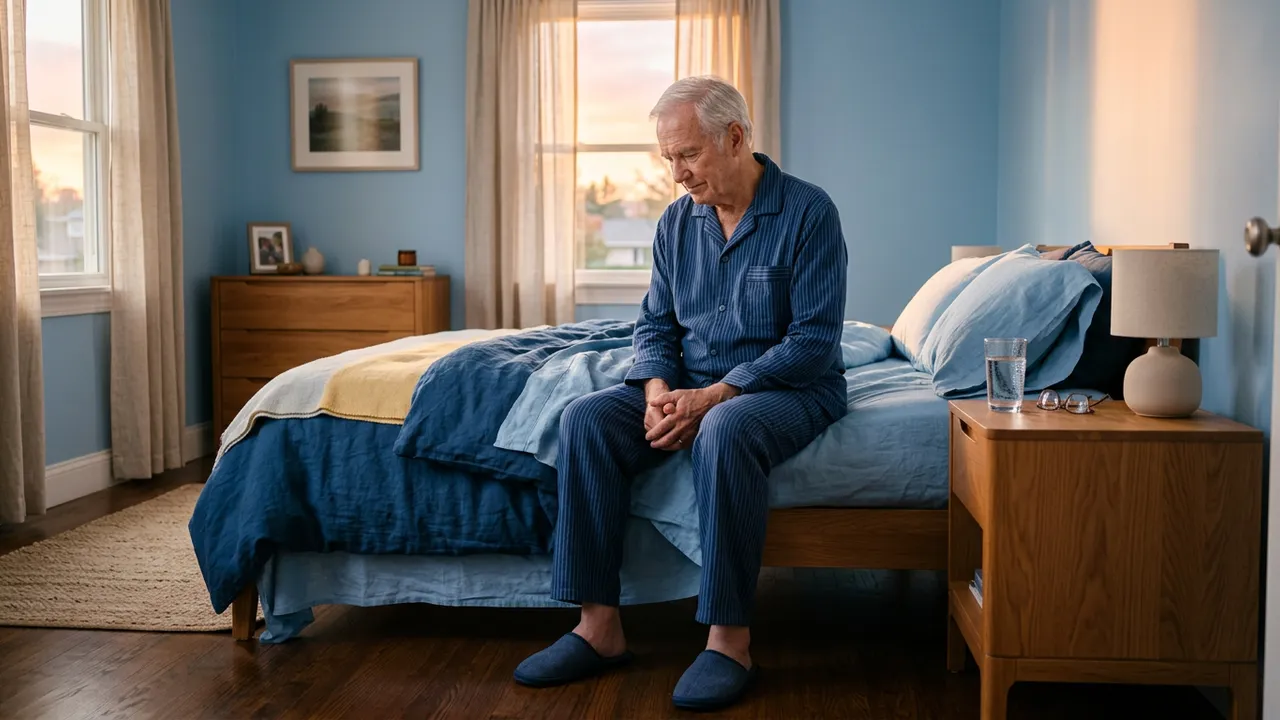
If you feel lightheaded, woozy or "gray" for a moment when you stand up, your blood pressure may be dropping too far as you rise. This is called orthostatic (or postural) hypotension, and it is a common, treatable cause of falls. A slow-rise routine, enough fluids and a medicine review with your doctor can make a real difference.
What is happening
When you stand, gravity pulls blood toward your legs. Normally your body adjusts quickly. With orthostatic hypotension, it does not adjust fast enough, so less blood reaches your brain for a moment.
When older adults have repeated falls that no one can explain, the cause is most often related to the heart and circulation. Orthostatic hypotension is the most common culprit. Managing it is one of the strongest recommendations in the 2022 World Falls Guidelines.
Common causes
- Medicines. Water pills, alpha blockers (such as doxazosin, terazosin or prazosin), and other blood pressure and heart drugs. Some antidepressants, antipsychotics and opioids can do it too. In two CDC teaching cases with this problem, each person was taking three or four medicines that lower blood pressure.
- Not enough fluids. Dehydration lowers the amount of fluid in your blood vessels.
- Meals. Blood pressure can also drop during or after eating. This is called postprandial hypotension.
How your doctor checks for it
Ask your doctor or therapist to check your blood pressure lying down and then standing. You lie down for 5 minutes, then stand, and readings are taken within 1 minute and again at 3 minutes. A drop of 20 points in the top number or 10 points in the bottom number, or feeling lightheaded or dizzy, counts as positive. It helps to ask for the lying and standing check by name.
The slow-rise routine
Use this every time you get up from bed, and any time you have been sitting for a while:
- Pump your ankles. While still lying or sitting, point and flex your feet about 20 times to get blood moving.
- Sit on the edge of the bed. Pause for a moment with your feet flat on the floor.
- Stand up with support. Use a sturdy surface, such as a bed rail, a bed cane or a firm chair arm.
- Keep your feet moving. March in place for a few steps before you start walking.
- If you feel dizzy, sit back down right away and wait until it passes.
The night trip to the bathroom is the riskiest walk of the day. You are coming straight out of bed, it is dark, and you may be in a hurry. Light the whole route, keep the slow-rise routine, and talk with your doctor if you get up to urinate two or more times a night.
Hydration in the Florida heat
Unless your doctor has told you to limit fluids, aim for at least 48 ounces of fluid a day. That is six 8-ounce glasses.
In Tampa Bay heat and humidity, it is easy to fall behind without noticing, especially after yard work, a walk or time on the lanai. A few tips:
- Keep a water bottle where you sit most.
- Drink a glass with each meal and each medicine time.
- Be extra careful on hot days if you take a water pill. Ask your doctor how much fluid is right for you.
- If your doctor limits your fluids, follow that advice, not a general rule.
Other things that may help
- Smaller meals with fewer carbohydrates, and rising slowly after you eat, if dizziness follows meals.
- Compression. Waist-high compression stockings or an abdominal binder can help some people. Ask your doctor before using them.
- A medicine review. Your doctor may stop, switch or lower a medicine that is dropping your pressure. This is always a balance between preventing a stroke and preventing a fall, so never change a blood pressure medicine on your own.
- Prescription treatment. Some people need a medicine to raise blood pressure. That is a decision for your physician.
When to call the doctor
Call your doctor soon if you:
- Feel dizzy or lightheaded when standing more than once in a while
- Notice dizziness that started after a new medicine or a dose change
- Have fallen, or nearly fallen, after standing up
- Have a fall you cannot explain
Fainting or a fall where you may have lost consciousness needs prompt medical attention. Falls that cannot be explained are treated as possible fainting until a doctor finds the cause. If you think something is a medical emergency, call 911.
How Home Safety Solutions can help
During a home safety visit we look at the places where you rise and stand: your bed height, chairs, toilet and the night route to the bathroom. If we see signs of dizziness on standing, the report recommends follow-up with your physician or pharmacist. Learn what happens during a home safety visit. Call (813) 365-9171 or email info@homesafety.solutions.
Related reading: CDC: Postural Hypotension, what it is and how to manage it (PDF) · How do I prevent falls at night? · What should the house have ready before a hospital discharge? · Is it normal to fall as you get older?
This article is general education, not medical advice. Talk with your doctor, pharmacist, or therapist about your own situation.