
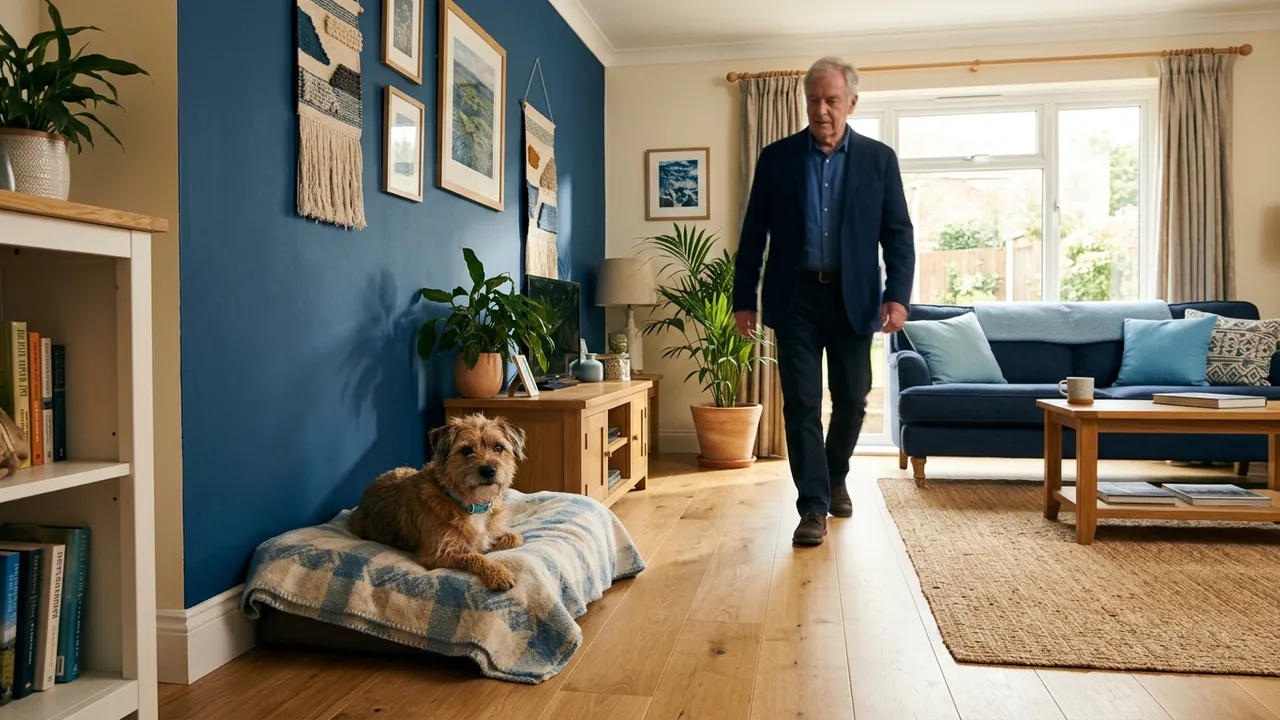
You do not have to give up your dog or cat to stay safe. Pets are a real trip hazard, and leashes can pull people off balance, but a few habits and small changes to the home can lower the risk. The goal is a home where you always know where your pet is and where you are stepping.
How pets cause falls
Fall prevention checklists name pets underfoot as a hazard, and dogs and cats trip people while leashes pull them over. The usual problems are:
- Tripping over a pet that lies in a doorway, follows you closely, or darts in front of you.
- Being pulled over by a leash when a dog lunges or pulls.
- Tripping over pet things, such as toys, beds, bowls, and leashes left on the floor.
- Slipping on spills, like water splashed from a bowl onto tile.
- Rushing, such as hurrying to let a dog out or to stop a cat from getting out.
These trips are more likely when you are rushing, carrying something, or moving in the dark.
Know where your pet is
Two pieces of advice from fall prevention training are simple: train pets to stay clear, and use gates.
- Use a pet gate while cooking. In the kitchen you are often carrying something hot or heavy.
- Teach a "place" spot. A pet bed in a corner, away from walkways, gives your pet somewhere to go while you move around. A trainer can help.
- Gate off stairs if your pet tends to run up and down them beside you.
- Pause before you move. Before you stand up, turn, or step back, look down and check for your pet.
Clear the floor
Pet gear counts as clutter. Keep walkways clear and at least 36 inches wide, wider if you use a walker.
- Pick up toys every evening, the same way you would clear cords and shoes.
- Move beds and crates out of hallways, doorways, and the path from your bed to the bathroom.
- Place food and water bowls in a corner, not in a walkway. Put a non-slip mat under them.
- Wipe up water and accidents right away. Tile floors common in Florida homes get very slick when wet.
- Hang the leash on a hook by the door instead of leaving it on the floor or a chair.
Light the night
The night trip to the bathroom is already the riskiest walk of the day. If your pet sleeps on the floor beside the bed or roams at night, it gets riskier still.
- Add motion sensor night lights in the bedroom, hallway, and bathroom.
- Consider under-bed motion lights that light the floor without waking the household.
- Keep a flashlight by the bed in case of a power outage.
- Sit at the edge of the bed for a moment, look for your pet, then stand.
Walk the dog safely
Walking a dog adds a pull you cannot always predict.
- Pay attention. Be present while you walk; put the phone away on uneven ground, curbs, and crowded sidewalks.
- Keep one hand free when you can, especially on steps.
- Wear supportive, well-fitting shoes with non-slip soles.
- Pick your times and routes. In Florida, early morning or evening walks avoid the worst heat, and smooth, well-lit paths are safer than broken sidewalks.
- Ask for help if your dog pulls hard. A trainer, a family member, or a dog walker can share the job.
If you use a cane or walker, talk with your physical therapist before walking a dog. Managing a leash and a mobility aid together takes planning.
Build balance, too
Strong legs and good balance help you recover when a pet bumps you. Balance and strength exercise, done often enough and long enough, is the single most effective way to prevent falls. Ask your doctor or physical therapist about a program, or look for a class through NCOA's list of evidence-based programs.
How Home Safety Solutions can help
A home safety visit looks at the whole household, pets included: where your pet sleeps, eats, and waits for you, and how that crosses your daily paths. We suggest gates, lighting, and layout changes that fit both of you. Learn what happens during a home safety visit. Call (813) 365-9171 or email info@homesafety.solutions.
Related reading: How do I prevent falls at night? · Safety squad: getting grandkids involved · CDC Check for Safety home checklist (PDF) · Is it normal to fall as you get older?
This article is general education, not medical advice. Talk with your doctor, pharmacist, or therapist about your own situation.