
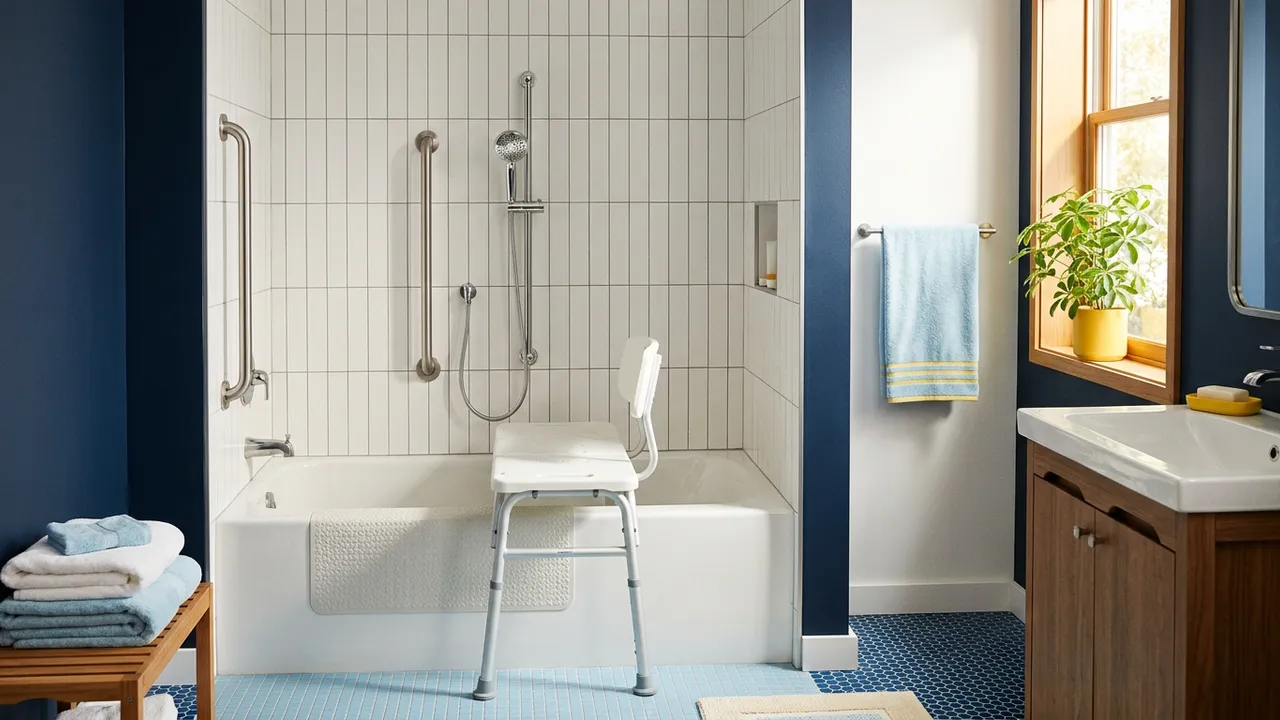
After a stroke, the home has to fit a body that now works differently on one side. The safest setup is built around how the person actually moves today, not how they moved before. A therapist watching real transfers in the real home is the best guide.
Why falls are more likely after a stroke
A stroke can affect strength, vision, thinking, and mood at once. Common reasons for falls include:
- Weakness on one side (hemiparesis) and stiff muscles (spasticity).
- Foot drop, when the toes don't lift and the foot catches on rugs and thresholds.
- Neglect, when the brain pays less attention to one side, so the person may bump into door frames or miss objects on that side.
- Visual field loss, a blind area on one side.
- Impaired judgment, urgency or incontinence, depression, and blood pressure drops when standing.
Build the plan around the stronger side and the real routine
Before you buy anything, have an occupational or physical therapist watch the person get out of bed, onto the toilet, into the shower, and up any steps. That tells you which side needs support, where a grab bar or rail belongs, and which way furniture should face.
Picture a 72-year-old coming home with weakness on the left. If the bed only allows getting out on the left, every night trip starts on the weak side. Moving the bed or nightstand can solve that at no cost.
Room by room
Paths and floors
- Clear paths at least 36 inches wide, wider for a walker.
- Remove throw rugs or use non-slip backing; a dragging foot catches edges.
- Mark thresholds and step edges with contrasting tape, including the lanai slider track.
Bedroom
- Set the bed height so feet rest flat with knees level with hips.
- Consider a bed cane or half rail.
- Use at least two night lights and light the path to the bathroom, such as with under-bed motion lights.
- Keep the phone, glasses, water, flashlight, and medicines on the nightstand.
Bathroom
- Install grab bars by the toilet and in and outside the tub or shower, anchored into studs, never suction cups.
- Use a raised toilet seat or safety frame and a contrasting toilet seat.
- Use a tub transfer bench or shower chair and a handheld shower.
- Add a non-slip mat and decals.
- If urgency is a problem, a bedside commode at night can remove the riskiest walk of the day.
Kitchen and living areas
- Store daily items between waist and shoulder height so no one reaches, bends, or climbs.
- Choose firm chairs with armrests at the right height.
Entries and stairs
- Rails on both sides for the full length of stairs and steps.
- Motion lights at entries and an outdoor grab bar by the door.
If neglect or visual field loss is present, place important items, such as the phone and call button, where the person reliably sees them. Ask the therapist which side that is.
Devices and bracing
- Foot drop: an ankle foot orthosis (AFO) or functional electrical stimulation (FES) may help. Your therapist or doctor can advise.
- Mobility aid: choose the least restrictive device that is safe, and practice turns, doorways, curbs, and transfers with it. Have the height and tips checked regularly.
Keep training, and train the caregiver too
The World Guidelines for Falls Prevention recommend individualized exercise to improve balance, strength, and walking after a stroke, built into everyday rehab. More impairments mean more supervision. Therapy may include high-intensity stepping practice and mirror therapy. Find a therapist through ChoosePT.
Caregivers should learn to assist rather than carry, drag, or lift, including bed, toilet, car, and floor transfers. If the person is homebound, Medicare home health can include PT, OT, and nursing. Never stop or change blood pressure or other medicines on your own; if standing makes the person dizzy, call the doctor or pharmacist.
Before discharge, check the route
The month after a hospital stay is one of the highest-risk periods for falls. Before the person comes home, check the route from the car to the bed to the bathroom, make sure equipment is delivered and fitted, and confirm the person has been trained on each recommendation. In Hillsborough, Polk, or Manatee, the Senior Connection Center can point you to local help; in Pasco and Pinellas, try the Area Agency on Aging of Pasco-Pinellas.
How Home Safety Solutions can help
A home visit after a stroke looks at the person and the house together: how they transfer, which side they lead with, and where the bathroom, bed, and entry need support. You get a prioritized report you can share with the rehab team. See What should the house have ready before a hospital discharge? Call (813) 365-9171 or email info@homesafety.solutions.
Related reading: What grab bars do I actually need in the bathroom? · How do I prevent falls at night? · CDC caregiver brochure (PDF) · Is it normal to fall as you get older?
This article is general education, not medical advice. Talk with your doctor, pharmacist, or therapist about your own situation.