
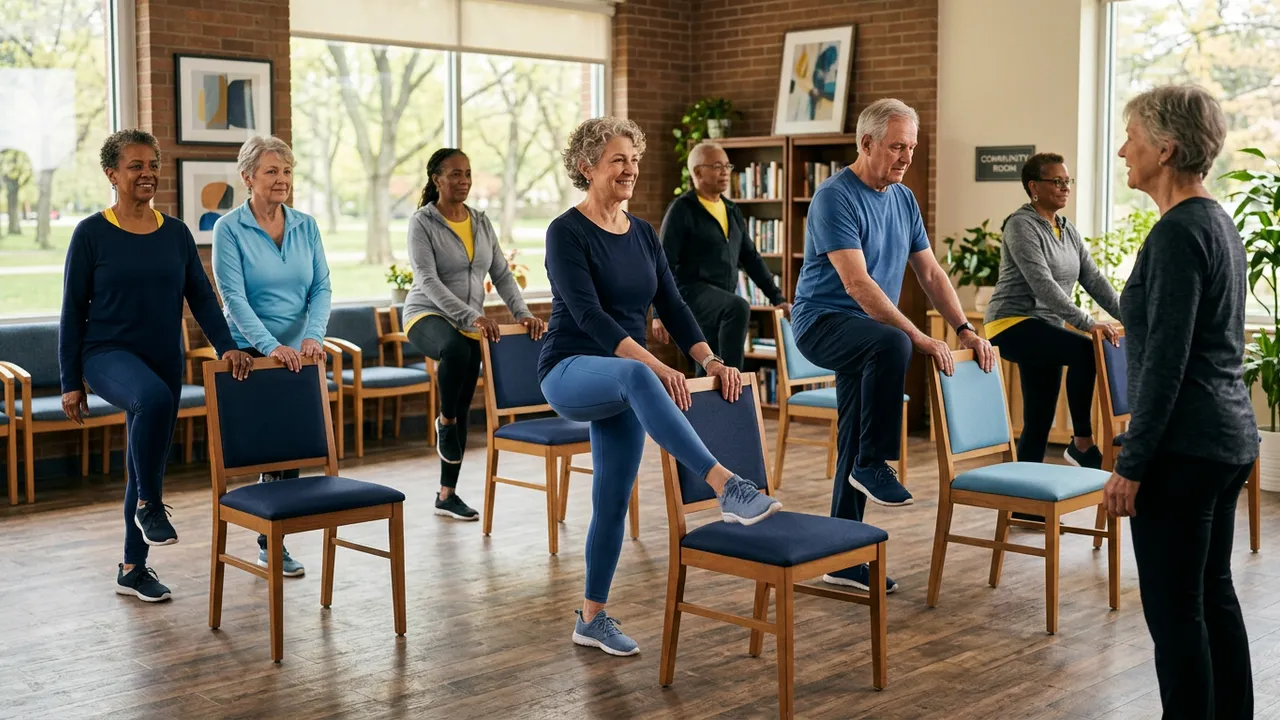
The exercise that prevents falls combines strength training with balance work that truly challenges you, done standing, several times a week, for months. Walking is great for your heart, but walking alone does not reliably prevent falls. Done right, exercise is the single most effective fall prevention strategy there is.
What the research shows
In 2024, the U.S. Preventive Services Task Force reviewed 37 studies with more than 16,000 older adults. Exercise cut the rate of falls by 15% and injurious falls by 16%. The Task Force gave exercise a Grade B recommendation for adults 65 and older at increased fall risk.
Programs that include a balance component work even better. Strength training alone or balance training alone is less effective than the two together.
The dose that works
This is where most people fall short. The research points to:
- At least 50 hours of training in total, spread over 3 to 6 months.
- Three or more sessions a week, with exercises made harder as you improve, for at least 12 weeks.
- Then keep going. The benefits fade when the exercise stops.
Fifty hours sounds like a lot, but it builds steadily when you train three or more times a week and keep going for months.
Why walking alone isn't enough
Lower doses of exercise, or walking by itself, do not reliably reduce falls. In people already at high risk, a walking-only program can even raise risk.
Walking still belongs in your week. The Physical Activity Guidelines for Americans suggest 150 to 300 minutes of moderate activity a week, muscle strengthening on 2 or more days, and balance activities. It also helps to get up and move every 1 to 2 hours instead of sitting for long stretches.
What "challenging balance" means
Balance exercises must be done standing, and they must be hard enough that you have to work. Sitting exercises build strength but do not train balance. A good program includes:
- Standing balance, from wide to narrow: feet together, then one foot in front of the other, then one leg. Later, a therapist may add eyes closed or a soft surface.
- Moving balance: reaching, turning, stepping in every direction, figure eights, and stepping over objects.
- Strength: thighs, hips, calves, and back. The muscles on the sides of your hips matter a lot, because sideways falls raise hip fracture risk about sixfold.
- Sit-to-stand practice, stairs, and getting down to and up from the floor.
- Doing two things at once: walking while talking or carrying a cup, so balance holds up in real life.
Always do balance work next to a sturdy counter or with a helper until you are ready to let go.
Match the exercise to the person
- Active and steady: faster sit-to-stands, step-ups, squats, obstacle courses, and walking on grass or gravel. Even elite athletes train balance and reaction.
- Frail or using a walker: seated marches and band exercises for strength, plus supported standing work like holding the counter and mini squats.
- Memory problems: the same routine at the same time each day, with simple cues and music.
Getting started safely
If you have fallen, feel unsteady, or have health conditions, start with your doctor or a physical therapist. A therapist can test your balance and prescribe a program such as the Otago Exercise Program, a home program built for older adults at high risk. The American Physical Therapy Association warns against under-dosed strength programs for older adults, so expect your program to feel like real work.
A simple first step is the CDC's Chair Rise Exercise (PDF). For group classes like tai chi, see our article Tai chi, Otago, and A Matter of Balance: finding a fall prevention program in Tampa Bay.
How Home Safety Solutions can help
An in-home safety visit includes standard balance and strength tests such as the Timed Up and Go and the 30-Second Chair Stand. We share the results in terms your doctor and therapist recognize, and we point you to local exercise programs. Learn what happens during a home safety visit. Call (813) 365-9171 or email info@homesafety.solutions.
Related reading: CDC Chair Rise Exercise (PDF) · Otago Exercise Program patient guide, UNC (PDF) · Move Your Way: materials for older adults · Find a physical therapist (ChoosePT) · Is it normal to fall as you get older?
This article is general education, not medical advice. Talk with your doctor, pharmacist, or therapist about your own situation.