
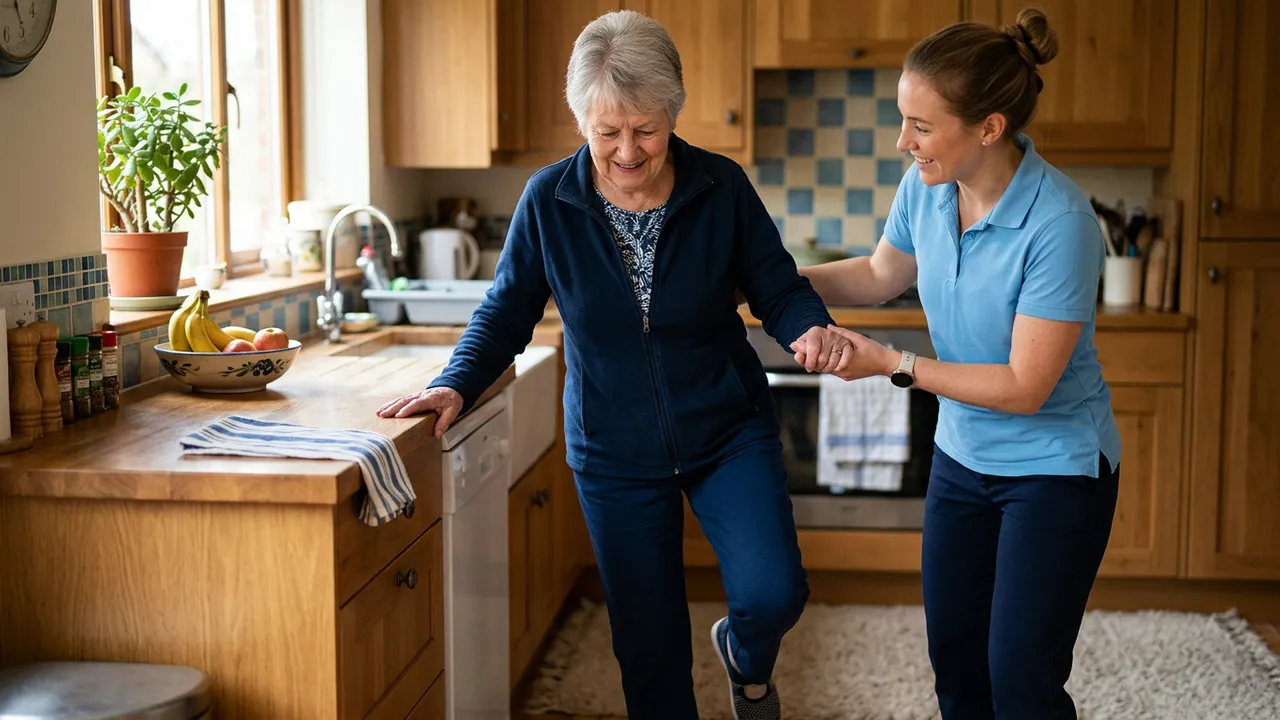
Some caution is healthy. But when worry about falling makes you move less, your muscles weaken, your walk changes, and your risk actually goes up. The good news: this kind of fear is treatable, and confidence can be rebuilt.
The fall-fear cycle
Many people who fall are not hurt, yet they come away afraid. Here is how the cycle usually goes:
- A fall or a near miss shakes your confidence.
- You start avoiding stairs, outings, or chores.
- Less activity means weaker legs and poorer balance.
- Weaker legs and poorer balance lead to more falls.
Fear also changes how people walk. Many adopt a slow, wide-legged "cautious gait" and keep both feet on the ground longer. It feels safer, but it is actually less stable. The good news is that this fearful walk is largely reversible.
Fear of falling can work a lot like the stress that follows any scary event. It is triggered by reminders and tied to certain places, like the shower or the front steps.
Signs to watch for in your parent
- Holding onto furniture, walls, or counters to get around the house
- Turning down outings, church, or visits they used to enjoy
- Avoiding the stairs or the shower
- Saying they are worried about falling, even if they never have
- After a hospital stay, avoiding looking down at the floor or leaning forward to stand up
Say it out loud
Being worried about falling is part of the CDC's standard fall screening. One of the three key questions is "Are you concerned (worried) about falling?" Clinicians now often use the word "concern" instead of "fear," because expert panels preferred it.
Tell your doctor, even if you have never fallen. Falling once doubles the chance of falling again, yet fewer than half of people who fall tell their doctor. A clinician can measure concern with a short questionnaire called the Falls Efficacy Scale International, or FES-I.
What rebuilds confidence
The 2022 World Falls Guidelines recommend exercise, cognitive behavioral therapy, and occupational therapy to reduce concern about falling. Proven options include:
- Exercise. Supervised programs such as tai chi, yoga, and Pilates show the largest effects. Strength and balance training rebuild the body that fear has weakened.
- A Matter of Balance. A group program built specifically for concern about falling. It helps people increase activity and confidence.
- Cognitive behavioral therapy (CBT). Helps you notice and change the worried thoughts that keep you stuck.
- Occupational therapy (OT). An OT helps you do daily tasks safely, in your own home, so you can stop avoiding them.
- Physical therapy (PT). A PT tests your balance, finds the real risks, and builds a plan around them.
How confidence actually grows
Confidence grows from doing, not from being told you are fine. Four things build it:
- Small wins. Practice a task you have been avoiding, in small, safe steps, until it feels routine.
- Seeing others do it. A group class shows you people like you getting stronger.
- Encouragement. A therapist, friend, or family member cheering you on.
- Calming skills. Slow breathing and staying present in the moment.
Standing tall in an upright, confident posture may also help some people move with more assurance.
Know what to do if you fall
Much of the fear is about lying on the floor unable to get up. You can take that fear apart:
- Learn to get up from the floor. A therapist can teach you, starting with the last step and working backward until you can do the whole thing.
- Keep a phone or alert device on your body, not across the room, and practice using it.
- Set up check-ins with family or neighbors.
Our article I've fallen and I can't get up explains the steps.
For adult children
Taking over every task can feed the cycle. Try encouragement instead: "A little each day builds strength and helps you rely less on others." Offer to go to a class together, or help set up the home so your parent can move with confidence.
How Home Safety Solutions can help
An in-home safety visit starts with the person, including any concern about falling, then looks at the places that feel scary, like the shower or the steps. We suggest changes that make those spots safer so confidence can come back. Learn what happens during a home safety visit. Call (813) 365-9171 or email info@homesafety.solutions.
Related reading: I've fallen and I can't get up · The Quiet Negotiation: Safety, Independence, and Compassion · A Matter of Balance (MaineHealth) · CDC Stay Independent self-check (PDF) · Is it normal to fall as you get older?
This article is general education, not medical advice. Talk with your doctor, pharmacist, or therapist about your own situation.