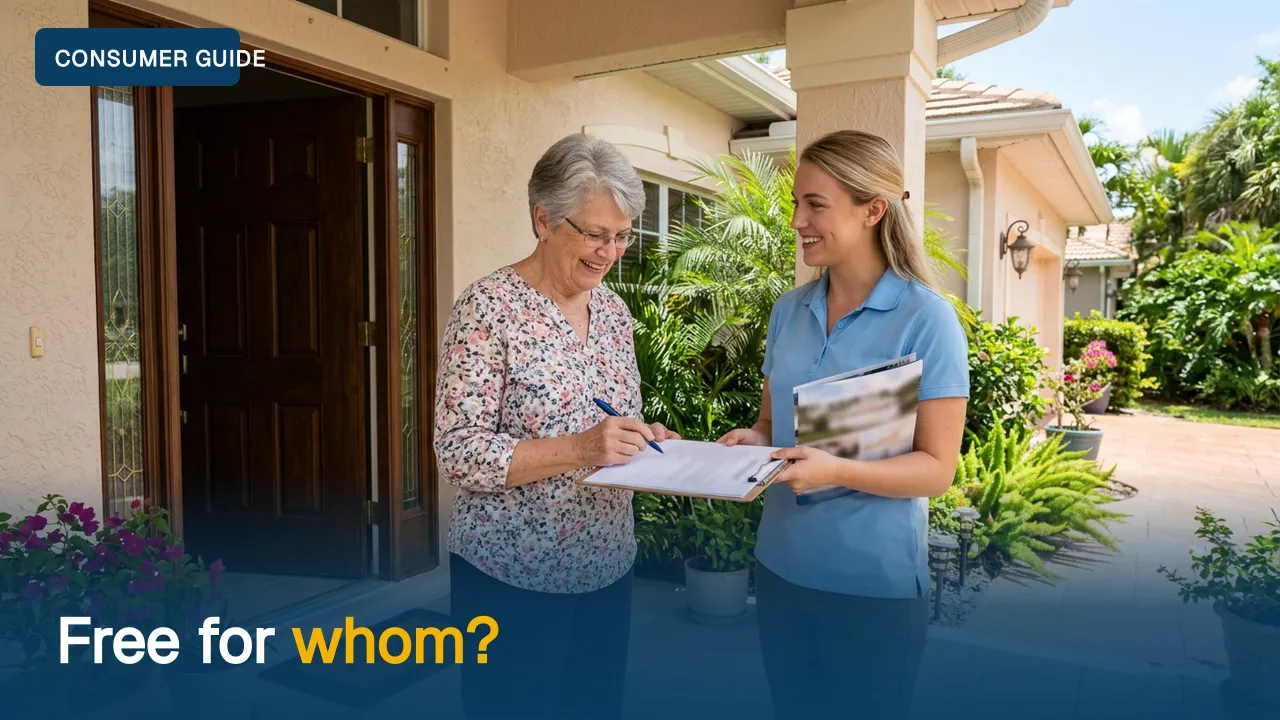
The visit costs nothing, but it is usually a sales appointment. A company that sells stair lifts, walk-in tubs or grab bar installation offers a free safety check because it leads to jobs. That does not make the advice wrong. It does mean you should know who benefits from each recommendation before you sign anything.
How the free check works
Home access companies commonly advertise free in-home safety assessments. The same companies sell and install the stair lifts, ramps, tub conversions and grab bars their assessments recommend. Some are franchises with sales targets.
There is nothing illegal about this model. Many of these contractors do good work. But the person assessing the home is paid, directly or indirectly, when you buy. That creates three common problems:
- The fix fits the product line. A company that sells walk-in tubs tends to see a need for a walk-in tub. A shower chair and two grab bars might have done the job.
- The person is not assessed. A contractor looks at the house. They are not trained to test balance, strength or walking, and those determine what the person needs.
- Pressure to decide today. Discounts that expire at the end of the visit are a sales tactic, not a safety need.
Research backs up the value of clinical training. In one randomized trial, home assessments by occupational therapists cut falls by nearly half. The same assessment done by trained non-therapists had no significant effect.
What a clinician looks for that a contractor may not
- How the person actually gets on and off the toilet, bed and chair
- Balance, leg strength and walking speed, using standard fall risk tests
- Medications, vision and dizziness that raise fall risk
- Whether a simpler, cheaper change will solve the problem
- What will likely be needed as the person's condition changes
Your rights if you sign at home
Federal and Florida law give you time to change your mind about many sales made in your home.
| Protection | What it says |
|---|---|
| FTC Cooling-Off Rule | For most sales of $25 or more made at your home, you have 3 business days to cancel. Saturday counts as a business day. |
| Florida home solicitation sale law | You may cancel until midnight of the third business day after signing. The contract must include a notice of your right to cancel. |
| Florida deposit rule for contractors | If a contractor takes more than 10 percent up front, they must apply for permits within 30 days and start work within 90 days of the permit. |
| Florida protections for older adults | Deceptive practices against people 60 and older or with disabilities can bring extra civil penalties of up to $15,000 per violation. |
Before you hire anyone
- Verify the license. Look up the contractor on the Florida DBPR license search. A local business tax receipt is not a contractor license.
- Get more than one bid. Get written, itemized estimates for the same scope of work.
- Get a written contract that includes the right-to-cancel notice.
- Never pay in full up front. Be wary of cash-only deals and pressure to decide immediately.
- Expect permits where the work requires them. A contractor who discourages permits is a red flag.
To report unlicensed activity in Florida, call DBPR at 1-866-532-1440. For help with a suspected scam, the AARP Fraud Watch Network Helpline is 877-908-3360.
Our independence policy
Home Safety Solutions is paid only by you, for the assessment. We do not sell or install equipment or construction. We accept no referral fees or payments from contractors. You choose your contractor, contract with them directly and pay them directly. If you want contractors to price the work, our Modification Prescription gives every bidder the same specifications, so you can compare quotes fairly.
Start with an Initial Consultation, a 30-minute phone call. Current prices are on our pricing page.
Sources
- Code of Federal Regulations. 16 CFR Part 429, Cooling-Off Rule
- Federal Trade Commission. Buyer's remorse: the FTC's Cooling-Off Rule
- Federal Trade Commission. Hiring a contractor
- Florida Statutes. 501.021 Home solicitation sale and 501.025 Right to cancel
- Florida Statutes. 501.2077 Violations involving senior citizens or persons with disabilities
- Florida Statutes. 489.126 Moneys received by contractors
- Florida DBPR. License search and construction consumer brochure
- AARP. Home improvement scams
- Pighills AC, et al. (2011). Environmental assessment and modification to prevent falls in older people. Journal of the American Geriatrics Society, 59(1), 26 to 33. (Via PubMed.)